
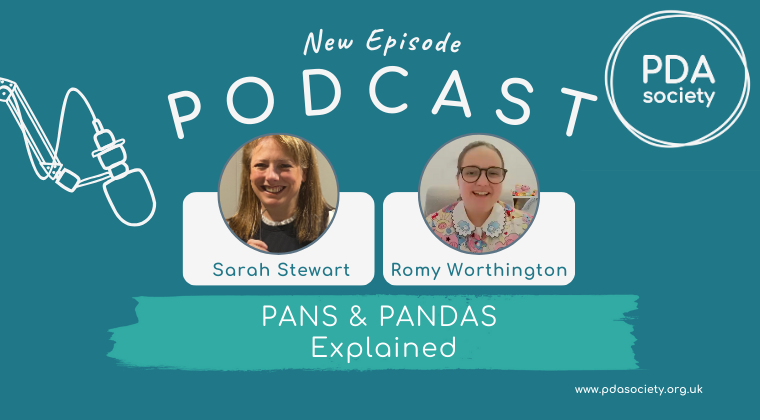
PANS & PANDAS Explained (Two-Part Podcast)
Available to purchase individually, or access this content as part of our monthly or annual subscription plans.
Overview
PANS & PANDAS Explained (Two-Part Podcast)
This two-part podcast is included in our monthly and annual subscriptions, or can be purchased individually. It offers clear explanation, thoughtful insight and practical understanding of PANS & PANDAS, helping families, carers and professionals make sense of these complex conditions in relation to PDA.
Explore our subscription options
PANS (Pediatric Acute-onset Neuropsychiatric Syndrome) and PANDAS (Pediatric Autoimmune Neuropsychiatric Disorders Associated with Streptococcal infections) are frequently discussed in relation to sudden behavioural and emotional changes — but they can be confusing to navigate. This two-part series brings clarity, lived experience and expert interpretation to support informed understanding.
In Part 1, we lay the foundations: what PANS and PANDAS are, how they may present, and the current thinking around diagnosis, triggers and overlap with emotional and behavioural responses that can be experienced by PDAers and their families.
Part 2 goes deeper into practical understanding: how symptoms can show up in everyday life, approaches to support within healthcare and educational settings, reflective insights from lived experience, and how to work collaboratively with professionals to make informed decisions.
Created by the PDA Society with contributions from people with lived experience and professionals in the field.
Disclaimer
The views and opinions expressed by guest speakers in this podcast are their own and do not necessarily reflect those of the PDA Society. While we aim to provide balanced and inclusive discussions, individual experiences and perspectives may vary. The PDA Society is committed to using language and terminology that reflects the preferences of PDAers and autistic people, but sometimes our guests may use language and terminology which differs. Appearance on our podcast is not an endorsement of an individual, and not all of our guests will align with our position on the issues discussed.