Healthcare and PDA: From Avoidance to Access (Two-Part Podcast)
Available to purchase individually, or access this content as part of our monthly or annual subscription plans.
Overview
Healthcare and PDA: From Avoidance to Access
This two-part podcast is included in our monthly and annual subscriptions, or can be purchased individually.
Explore our subscription options.
Part 1: Understanding Healthcare Experiences for PDAers
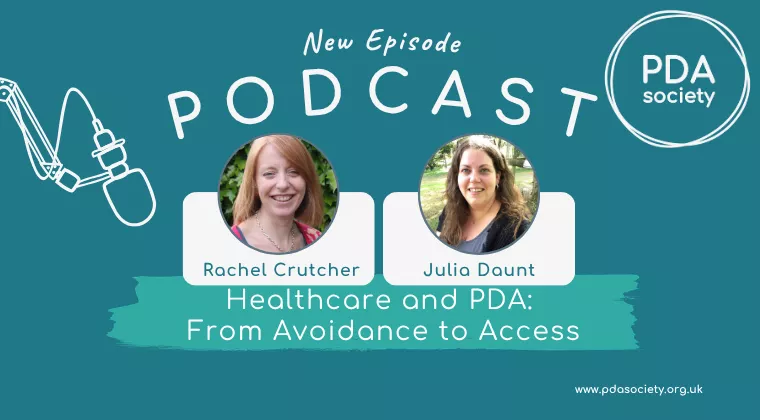
In this episode, Rachel from the PDA Society is joined by Julia Daunt, a PDA adult and trainer with the PDA Society, to explore the realities of accessing healthcare for PDAers.
Julia shares her lived experience of navigating medical environments, highlighting how appointments, procedures and interactions with professionals can often feel overwhelming, unpredictable and highly demanding. The conversation explores why healthcare settings can trigger anxiety for PDAers, including loss of control, sensory challenges, unfamiliar environments and the expectation to comply quickly with instructions.
Rachel and Julia discuss how these experiences can lead to avoidance, delayed care or heightened distress, even when support is urgently needed. Julia reflects on the importance of understanding how demand sensitivity shows up in medical contexts, and why what might appear as resistance is often a response to feeling unsafe or overwhelmed.
Part 1 focuses on building understanding, offering insight into what healthcare feels like from a PDA perspective, and why compassionate, flexible approaches are essential for supporting access.
Key themes:
- The challenges PDAers face when accessing healthcare
- Anxiety, control and unpredictability in medical settings
- Sensory and environmental factors affecting appointments
- Why avoidance and resistance can occur
- Understanding healthcare through a PDA lens
- The importance of safety, autonomy and trust
Part 2: Practical Strategies for Accessible Healthcare
In this second episode, Rachel continues the conversation with Julia Daunt, focusing on practical strategies for making healthcare more accessible for PDAers.
Drawing on questions from subscribers, Julia shares concrete suggestions for how medical professionals, families and individuals can reduce demand and support engagement during appointments. This includes preparing in advance, offering choices, adapting communication styles and allowing more time and flexibility.
The discussion explores how small adjustments can make a significant difference, such as explaining procedures clearly, avoiding unnecessary pressure, and recognising when someone needs space rather than immediate compliance. Julia also speaks about self-advocacy, including how PDAers can communicate their needs, even in high-stress moments.
Part 2 offers practical, compassionate guidance aimed at improving real-world healthcare experiences, helping both professionals and families better support PDAers in accessing the care they need.
Key themes:
- Practical adjustments for healthcare professionals
- Reducing demand during appointments
- Communication strategies that support PDAers
- Preparing for and navigating medical environments
- Supporting self-advocacy in stressful situations
- Creating flexible, responsive healthcare experiences
Disclaimer
The views and opinions expressed by guest speakers in this podcast are their own and do not necessarily reflect those of the PDA Society. While we aim to provide balanced and inclusive discussions, individual experiences and perspectives may vary.
The PDA Society is committed to using language and terminology that reflects the preferences of PDA and autistic people. However, guest speakers may sometimes use language that differs from our own. Appearance on our podcast does not constitute endorsement, and not all guests will align with our position on the issues discussed.
Further sources of support and information:
- PDA Society Training Hub: https://training.pdasociety.org.uk/pda-podcasts/
- PDA Society Website: https://www.pdasociety.org.uk/
- PDA Society Training: https://www.pdasociety.org.uk/support-and-training/training/
- PDA Society Support Service: https://www.pdasociety.org.uk/support-and-training/support/