Helpful Therapies for PDA Adults
Enjoy this podcast as part of your free PDA Basics plan, and all monthly and annual plans.
This course is available through our subscription service. Please sign in or explore our subscriptions.
Overview
Helpful Therapies for PDA Adults
What makes therapy genuinely helpful for a PDA adult – and how can you find a therapist who truly understands?
For many PDA adults, the idea of therapy can feel overwhelming. Previous experiences of being misunderstood, misdiagnosed or expected to fit traditional therapeutic models can make seeking support feel like yet another demand.
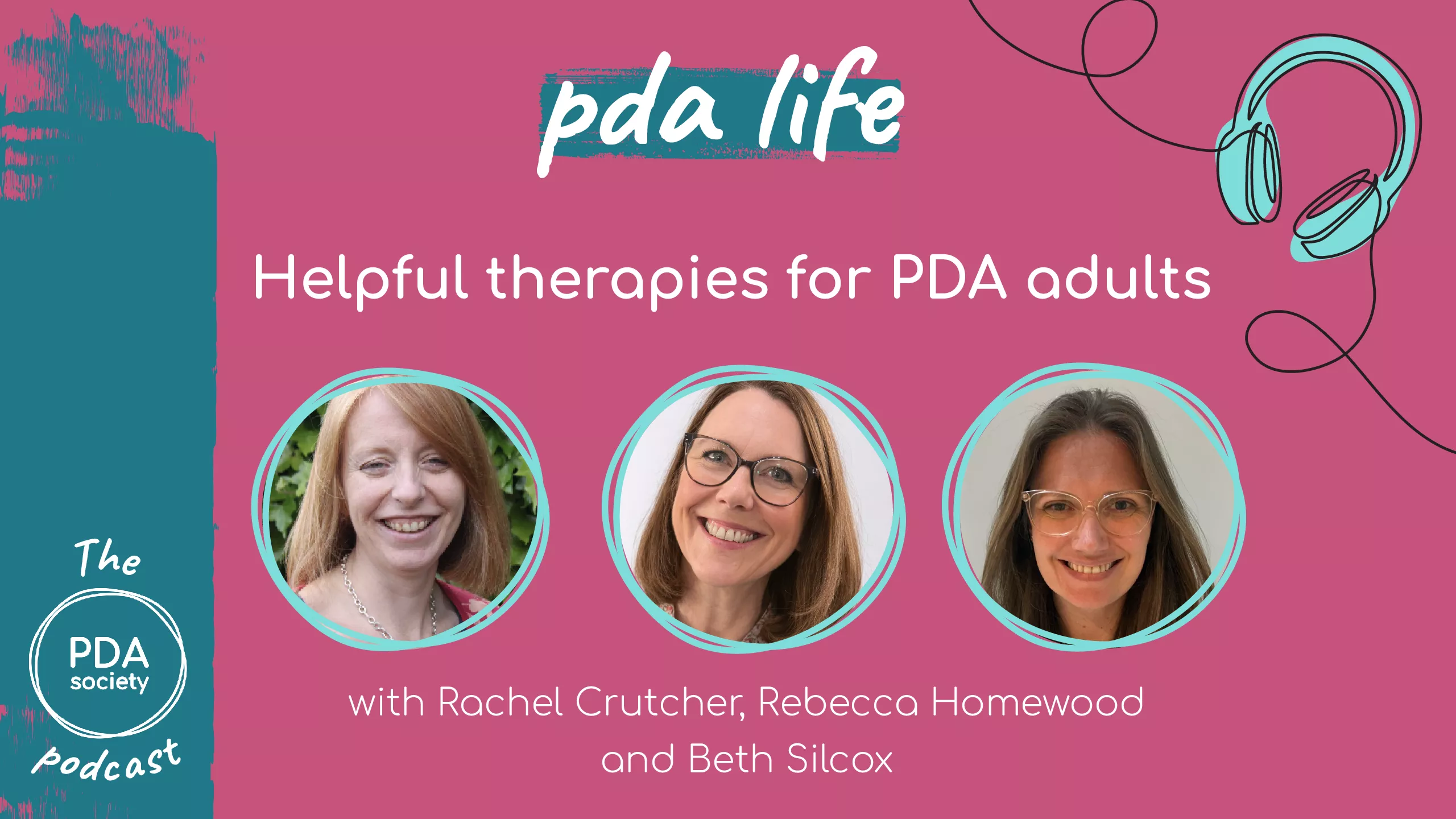
In this thought-provoking podcast, neuro-affirming therapists Beth Silcox and Rebecca Homewood explore what effective therapy for PDA really looks like. Together, they discuss why conventional approaches don’t always meet the needs of PDA adults, how therapy can be adapted to reduce threat and build trust, and the practical steps to finding a therapist who works collaboratively rather than expecting you to change who you are.
Whether you’re considering therapy for yourself, supporting a loved one, or you’re a mental health professional wanting to better understand PDA, this episode offers reassuring, practical advice grounded in real clinical experience.
In this episode you will discover:
- Why many traditional therapy approaches can feel overwhelming or unsafe for PDA adults
- What genuine neuro-affirming practice looks like in the therapy room
- How autonomy, flexibility and trust create the foundations for effective therapy
- Practical ways therapists can reduce demands and support nervous system safety
- How to choose a counsellor or therapist who understands PDA
- The questions to ask before committing to therapy
- Red flags that may suggest a therapist isn’t the right fit
- Why therapy isn’t about “fixing” PDA, but understanding yourself with greater compassion
- How supporters and family members can help someone access therapy without increasing pressure
Finding the right therapist can be just as important as deciding to start therapy in the first place. This episode explains why a neuro-affirming approach makes such a difference for PDA adults, and how small changes in communication, flexibility and understanding can transform the therapeutic experience.
Beth and Rebecca share practical insights that will help you recognise what good therapy should feel like, empowering you to make informed choices and approach counselling with greater confidence.
What you will gain
After listening, you’ll:
- Better understand what makes therapy effective for PDA adults
- Feel more confident identifying neuro-affirming therapists
- Know what to ask during an initial consultation
- Learn how to recognise approaches that may unintentionally increase anxiety or demands
- Feel reassured that therapy can be adapted to meet your individual needs
- Gain practical guidance whether you’re seeking support yourself or helping someone else
Who is this Podcast for?
This episode is ideal for:
- PDA adults considering therapy
- Parents, partners, friends and family members supporting a PDA adult
- Counsellors, therapists and mental health professionals
- Autism and neurodiversity practitioners
- Anyone wanting to understand how therapy can be adapted to better support people with a PDA profile
Therapy should never be about changing who you are – it should help you understand yourself, feel safe enough to be yourself, and find ways of living that work for you. This compassionate and practical conversation offers valuable guidance for anyone navigating therapy and PDA.
Guest links
LilyOaks Psychological and Counselling Practice: https://www.lilyoakspractice.co.uk/
Further sources of support & information
More podcasts available on the PDA Society Training Hub:
https://training.pdasociety.org.uk/pda-podcasts/
PDA Society Training:
https://www.pdasociety.org.uk/support-and-training/training/
PDA Society Support Service: https://www.pdasociety.org.uk/support-and-training/support/
You can find our Facebook support groups here
DISCLAIMER
The views and opinions expressed by guest speakers in this podcast are their own and do not necessarily reflect those of the PDA Society.
While we aim to provide balanced and inclusive discussions, individual experiences and perspectives may vary. The PDA Society is committed to using language and terminology that reflects the preferences of PDA and autistic people, but sometimes our guests may use language and terminology which differs.
Appearance on our podcast is not an endorsement of an individual, and not all of our guests will align with our position on the issues discussed.