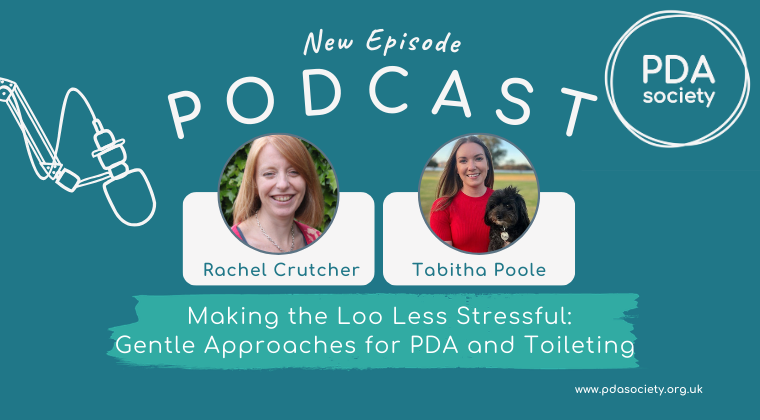
Making the Loo Less Stressful: Gentle Approaches for PDA and Toileting (Two-Part Podcast)
Available to purchase individually, or access this content as part of our monthly or annual subscription plans.
Overview
This two-part podcast is included in our monthly and annual subscriptions, or can be purchased individually.
Explore our subscription options.
In Part 1, Rachel from the PDA Society is joined by Tabitha Poole, an occupational therapist from the charity ERIC, to explore a topic that many PDA families describe as a common challenge, toileting.
Tabby shares her professional insight into why toileting can be difficult for PDA children and young people, and how these challenges are often linked to anxiety, demand sensitivity, sensory differences and the need for autonomy. Rachel and Tabby discuss common experiences such as refusal, avoidance, accidents, fear of the toilet, and the impact of shame and pressure.
Part 1 focuses on understanding. It explores what might be underneath toileting difficulties, why traditional approaches can make things harder, and how reframing toileting as a nervous system and safety issue can lead to more compassionate and effective support.
Key Themes
- Why toileting can be particularly difficult for PDA children
- Anxiety, demand sensitivity and the need for autonomy
- The role of sensory sensitivities and interoception
- How pressure, shame and urgency can increase distress
- Reframing toileting difficulties through understanding and safety
In Part 2, Rachel continues the conversation with Tabitha Poole, an occupational therapist from the charity ERIC, focusing on practical and compassionate strategies for supporting toileting difficulties in PDA children and young people.
Tabby shares deeper insight into what can help when toileting has become a source of distress, avoidance or conflict. Rachel and Tabby discuss ways to reduce pressure, protect dignity, and support children through anxiety, sensory overwhelm and fear. The conversation highlights how progress often requires time, trust, and a flexible approach that prioritises safety and autonomy.
Part 2 offers realistic reassurance and practical guidance for parents who feel stuck, reminding listeners that toileting difficulties are common, and that supportive approaches can make a meaningful difference over time.
Key Themes
- Practical strategies for supporting toileting with PDA
- Reducing conflict, pressure and distress around toileting
- Supporting autonomy, dignity and emotional safety
- Understanding fear, sensory overwhelm and interoception
- Rebuilding trust after difficult toileting experiences
Disclaimer
The views and opinions expressed by guest speakers in this podcast are their own and do not necessarily reflect those of the PDA Society. While we aim to provide balanced and inclusive discussions, individual experiences and perspectives may vary. The PDA Society is committed to using language and terminology that reflects the preferences of PDA and autistic people, but sometimes our guests may use language and terminology which differs. Appearance on our podcast is not an endorsement of an individual, and not all of our guests will align with our position on the issues discussed.
Further sources of support and information
- PDA Society Website: https://www.pdasociety.org.uk/
- PDA Society Training: https://www.pdasociety.org.uk/support-and-training/training/
- PDA Society Support Service: https://www.pdasociety.org.uk/support-and-training/support/
Guest links:
Instagram:
@toilettimewithtabby
@continencehub
Advice about bowels, bladders and toileting for children with additional needs: https://eric.org.uk/advice-about-bladders-bowels-and-toileting-for-children-with-additional-needs-2/
Potty training children with additional needs: https://eric.org.uk/potty-training/children-additional-needs/
Toileting support for autistic children: https://eric.org.uk/children-with-additional-needs/toileting-support-for-autistic-children/
Interoception and toileting: https://eric.org.uk/interoception-and-toileting/
Sensory needs and toileting: https://eric.org.uk/sensory-needs-and-toileting/
ERIC Instagram: https://www.instagram.com/eric_charity
ERIC Facebook: https://www.facebook.com/ERIC.UK1