
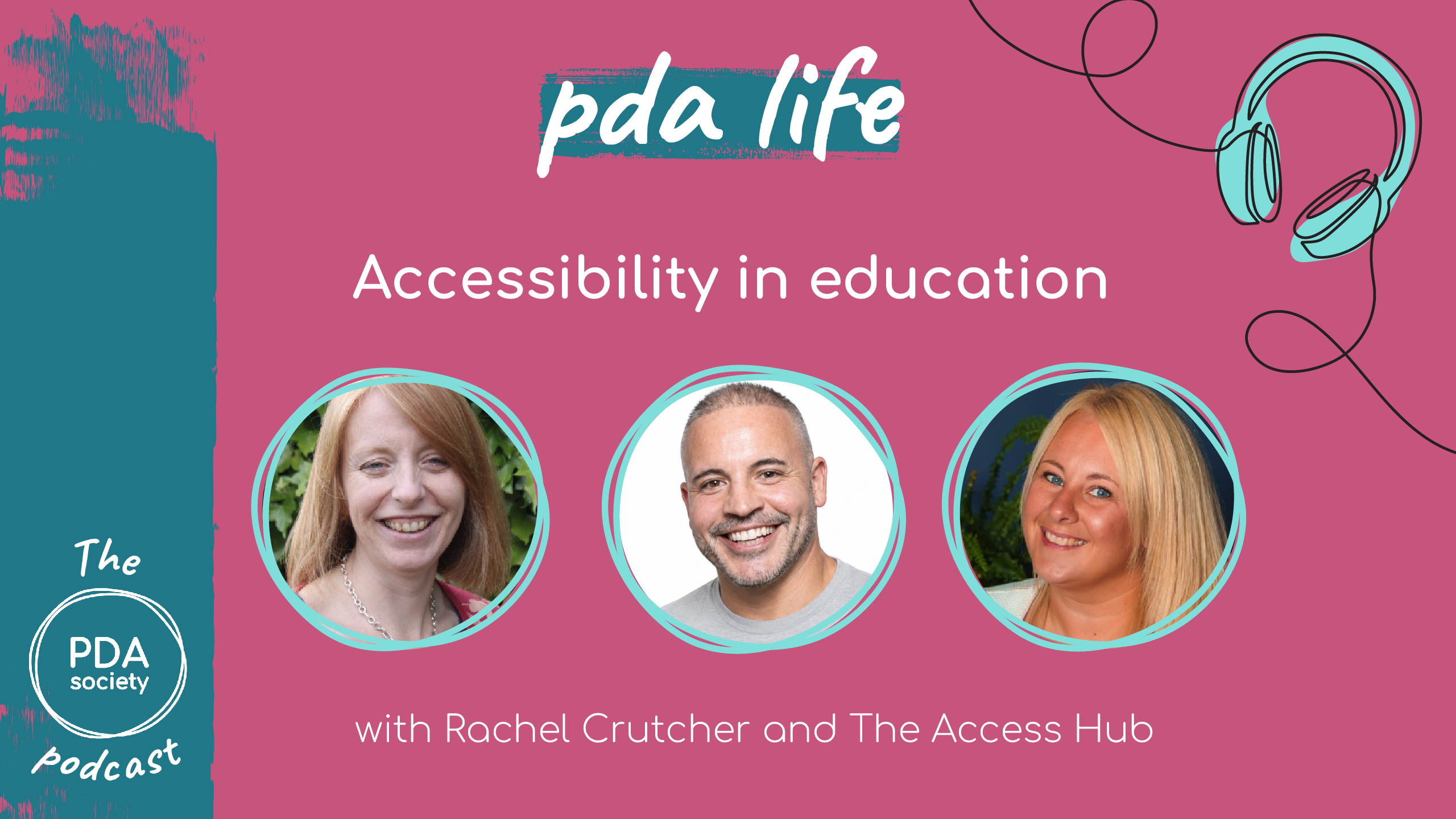
The Access Hub – Accessibility for PDA Pupils
Enjoy this podcast as part of your free PDA Basics plan, and all monthly and annual plans.
This course is available through our subscription service. Please sign in or explore our subscriptions.
Overview
The Access Hub – Accessibility for PDA Pupils
What does it really mean for a child to access their education?
For many PDA and other neurodivergent pupils, simply being present in the classroom doesn’t mean they can access learning. Behind the appearance of coping may be a child working tirelessly to manage overwhelming sensory, social and emotional demands—often leading to exhaustion, anxiety and meltdowns once they get home.
In this episode, Rachel is joined by Kate Whittlesey and Pat MacMahon from The Access Hub to explore what genuine accessibility looks like for PDA and neurodivergent children. Together, they challenge traditional ideas of inclusion and explain why creating accessible learning environments is about removing barriers—not lowering expectations.
Drawing on extensive experience working with schools, families and education professionals, Kate and Pat discuss how small, thoughtful changes can transform a child’s educational experience and why true inclusion begins with changing culture, not just policies.
In this episode you will discover:
- Why attendance alone doesn’t mean a child is successfully accessing education
- The hidden barriers PDA and neurodivergent pupils experience throughout the school day
- How sensory, social and emotional demands can affect learning and wellbeing
- Why meltdowns after school often reflect the effort of masking throughout the day
- The difference between compliance and genuine inclusion
- Why reasonable adjustments are about removing barriers rather than lowering expectations
- How schools can create more accessible environments through practical, everyday changes
- The importance of understanding each child’s individual needs rather than relying on generic strategies
- How stronger partnerships between parents and schools lead to better outcomes
- How The Access Hub supports schools to build accessibility into their everyday practice
- Why so many parents of PDA children experience burnout and emotional exhaustion
- The hidden impact of constantly living in survival mode
- How to recognise the signs that your own wellbeing needs attention
- What “micro moments” are and how they can help you regulate throughout the day
- Simple grounding and breathing techniques that fit into busy family life
- Why many parents feel unable to ask for help – and how to overcome those barriers
- The importance of finding connection with other parents who truly understand
- Practical ways to lower your stress levels without unrealistic self-care expectations
- How looking after your own wellbeing benefits your whole family
- Why being a “good enough” parent is more than enough
Whether you’re supporting a child at home or working within education, this episode offers a fresh perspective on what accessibility really means. Rather than focusing solely on attendance or behaviour, it encourages us to ask a more important question: Can this child genuinely access learning in a way that protects their wellbeing?
Packed with practical examples and compassionate insight, this conversation will help you better understand the daily experiences of PDA pupils and how meaningful adjustments can make education more inclusive for everyone.
Guest links
Website – https://theaccesshub.co.uk/
Further sources of support & information
More podcasts available on the PDA Society Training Hub:
https://training.pdasociety.org.uk/pda-podcasts/
PDA Society Training:
https://www.pdasociety.org.uk/support-and-training/training/
PDA Society Support Service: https://www.pdasociety.org.uk/support-and-training/support/
You can find our Facebook support groups here
DISCLAIMER
The views and opinions expressed by guest speakers in this podcast are their own and do not necessarily reflect those of the PDA Society.
While we aim to provide balanced and inclusive discussions, individual experiences and perspectives may vary. The PDA Society is committed to using language and terminology that reflects the preferences of PDA and autistic people, but sometimes our guests may use language and terminology which differs.
Appearance on our podcast is not an endorsement of an individual, and not all of our guests will align with our position on the issues discussed.