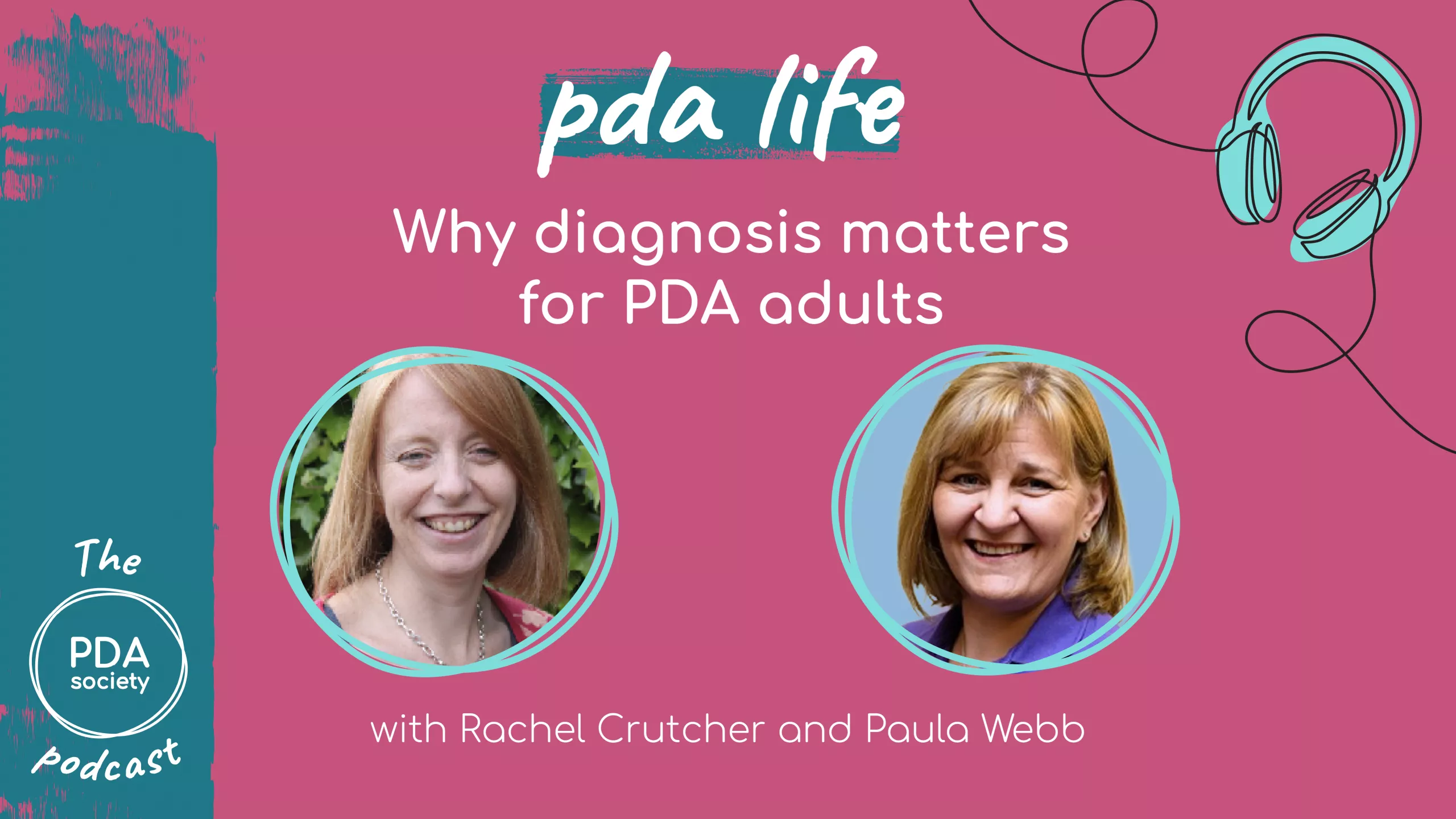
Why diagnosis matters for PDA adults
Enjoy this podcast as part of your free PDA Basics plan, and all monthly and annual plans.
This course is available through our subscription service. Please sign in or explore our subscriptions.
Overview
Why Diagnosis Matters
We’re seeing a rise in adults discovering their autistic identities, and yet it’s becoming increasingly difficult to access a diagnosis — despite diagnosis often being used to gatekeep vital support.
In this episode, we’re chatting with PDA parent Paula about why access to a diagnosis is so important for:
- Finding your community
- Understanding your experiences
- Accessing appropriate support
- Feeling validated in your identity
If you’re struggling to find your PDA community, you can:
- Join our Facebook Groups
- Contact our support service for help and guidance
Guest Links Referred to in the Podcast
PDA Society – How to Prepare for an Assessment
https://www.pdasociety.org.uk/what-is-pda/pda-and-diagnosis/
NICE Guidelines
https://www.nice.org.uk/guidance/qs51/chapter/Quality-statement-2-Assessment-and-diagnosis
Identifying & Assessing a PDA Profile – Practice Guidance
https://www.pdasociety.org.uk/research-professional-practice/identification-and-diagnosis-process/
PDA Society Support Service
https://www.pdasociety.org.uk/support-and-training/support/
Independent Diagnostic Centres
https://www.pdasociety.org.uk/support-and-training/diagnostic-centres/
Individual Funding Request
(Or contact PDA Society for more detail.)
Equality Act 2010
DISCLAIMER
The views and opinions expressed by guest speakers in this podcast are their own and do not necessarily reflect those of the PDA Society. While we aim to provide balanced and inclusive discussions, individual experiences and perspectives may vary. The PDA Society is committed to using language and terminology that reflects the preferences of PDA and autistic people, but sometimes our guests may use language and terminology which differs. Appearance on our podcast is not an endorsement of an individual, and not all of our guests will align with our position on the issues discussed.