
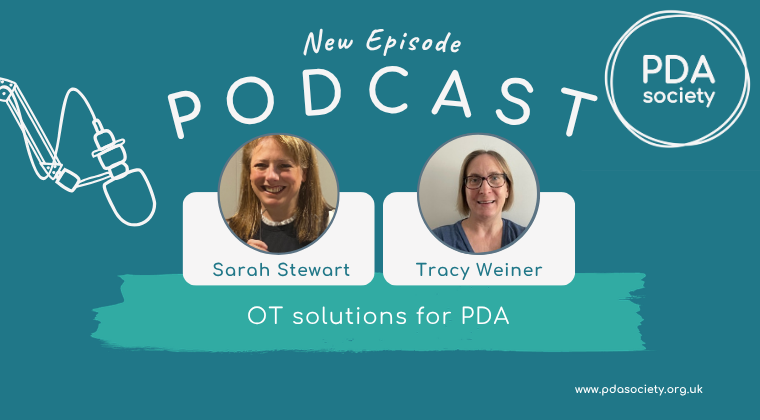
OT solutions for PDA
Enjoy this podcast as part of your free PDA Basics plan, and all monthly and annual plans.
This course is available through our subscription service. Please sign in or explore our subscriptions.
Overview
In this episode, Sarah Stewart from the PDA Society is joined by Tracy Weiner, a former Occupational Therapist and parent of a PDA young person, to explore how sensory needs can impact PDA individuals and their daily lives.
Tracy brings both professional insight and lived experience to the conversation, sharing how sensory differences can shape behaviour, emotional responses and overall wellbeing. Together, Sarah and Tracy discuss how sensory needs are often misunderstood, particularly when they present as avoidance, distress or heightened reactions to everyday situations.
The episode explores how sensory sensitivities can interact with anxiety and demand sensitivity, making environments such as home, school and public spaces feel overwhelming. Tracy reflects on how recognising these needs can help reframe behaviour, shifting the focus from “what is going wrong” to “what might this person be experiencing”.
The discussion also highlights the importance of observation, flexibility and adapting environments to better support regulation. Tracy shares how small changes, such as adjusting sensory input or reducing expectations in challenging moments, can have a significant impact on reducing distress.
This episode offers a compassionate and practical perspective on sensory needs, helping parents and professionals better understand how to support PDA individuals in a way that promotes safety, autonomy and wellbeing.
Key Themes
- Understanding sensory needs in PDA individuals
- How sensory differences can impact behaviour and emotions
- The link between sensory overwhelm, anxiety and demand sensitivity
- Reframing behaviour through a sensory lens
- Using flexibility and observation to reduce distress
Further Sources of Support and Information
- More podcasts available on the PDA Society Training Hub: https://training.pdasociety.org.uk/pda-podcasts/
- PDA Society Training: https://www.pdasociety.org.uk/support-and-training/training/
- PDA Society Support Service: https://www.pdasociety.org.uk/support-and-training/support/
Guest Links
- https://www.kentcht.nhs.uk/childrens-therapies-the-pod/neurodivergence/sensory-processing-pathway
- https://www.sensoryintegrationeducation.com/pages/free-sensory-resources
- https://www.rcot.co.uk/
- https://www.sensory-people.co.uk/parents-guide-to-sensory-integration/
Disclaimer
The views and opinions expressed by guest speakers in this podcast are their own and do not necessarily reflect those of the PDA Society. While we aim to provide balanced and inclusive discussions, individual experiences and perspectives may vary. The PDA Society is committed to using language and terminology that reflects the preferences of PDA and autistic people, but sometimes our guests may use language and terminology which differs. Appearance on our podcast is not an endorsement of an individual, and not all of our guests will align with our position on the issues discussed.